Thursday, 30 September 2010

Advice to a new student

As of the start of this week, I'm officially the co-supervisor of a PhD. student. Technically, she really "belongs" to a colleague, but I expect to play a role in her work, and today we had our first, largely informal meeting with her. Suddenly things feel all grown-up.

Anyway, the thought occurs: What advice would I give a new PhD. student? There are lots of obvious, practical things, but what else did I learn (or, more commonly, not learn) from my own studies back in the 1990s? The following are the first 10 things that crossed my mind ...
  1. You do not need to fully read and comprehend every paper that you come across
  2. Don't shy from presenting your work: you need the practice, and the thick skin
  3. Try to publish something while you're still a student; get over the idea that papers are written by "gods"
  4. Your "superiors" do not know everything; ignorance does not make you an idiot
  5. No matter what time you start and finish, there will always be fellow students who seem to work harder than you; secret: they're not
  6. Try to recognise perfectionism in your thesis-writing and get over it
  7. Enjoy your PhD studies; they give you a freedom to try things that you'll never have again
  8. Take your full allowance of holidays; try not to work weekends until you have to
  9. You will make some of your best friends during your studies; don't lose them trying to sort out your career
  10. LATEX is the best way to write your thesis
I'm not sure how helpful these are, but taking them to heart when I was a student would certainly have helped me (and I could add a few more concerning supervisor management, but I won't get onto that).

Wednesday, 29 September 2010

The Book with the Huge Print-run

A bit of a change of pace this time with a dip into the world of the literary phenomenon by way of The Girl with the Dragon Tattoo, the multi-million copy-selling crime novel by the Swedish, journalist-cum-novelist Stieg Larsson. So, is it, like The Da Vinci Code, just another over-hyped example of the paucity of mass market taste? Or does it live up to the word-of-mouth fanfare?

Mikael Blomkvist is stuffed. His latest corporate exposé of a corrupt industrialist has backfired, and ostensibly rock-solid evidence has melted in the courts and landed him a short term in prison, as well as threatened the future of the small, independent magazine he works for. But his mass media infamy has brought him to the attention of another industrialist, Henrik Vanger, with a decades-old mystery to solve. Taunted by the annual arrival of a floral memento, and compelled by his advancing years, Vanger offers Blomkvist the chance to save his employer from financial ruin by investigating the disappearance, and presumed murder, of his favourite niece, Harriet. Vanger also does some investigating of his own, hiring a hacker, Lisbeth Salander, the eponymous "girl with the dragon tattoo", to uncover the truth behind Blomkvist's imprisonment. But the obsessive Salander's interest in her assignment doesn't end when she files her report. Before long she too becomes involved in unravelling the fate of Harriet, and joins Blomkvist in an investigation that unearths a succession of unpleasant revelations about the Vanger clan and its past, and which exposes both to very present dangers.

Overall, a well-plotted and enjoyable thriller, marred slightly by an overly light touch on the part of Larsson's editor. The latter never comes close to derailing the novel, but it does make for some long-winded passages, redundant characters and occasionally purple prose (though the translator may bear some responsibility here). The strongest aspect of the novel is its central mystery, but Larsson does a good job of blending in Blomkvist's original investigation, as well as Salander's abused background. Larsson's writing is rather flat-footed at times, which isn't a huge surprise given this was his first novel, but even so his characters come alive much more convincingly than those of fellow best-selling authors like Michael Crichton, Dan Brown and (the horror) Jeffrey Archer.

Perhaps unsurprisingly given Larsson's real-life job as a campaigning journalist, the novel is not content spinning a yarn, and works in a more serious theme from modern Sweden. This is implied by both Salander's story and the resolution of Harriet's disappearance, but is brought front-and-centre by the statistics that are quoted at the head of each chapter. These document the abuse by men that Swedish women are at the receiving end of, and the resulting second-class status that women occupy. The engagement of such a crowd-pleasing novel with this more stark message is pleasing, although the message is something of a surprise given the wide perception of Sweden as a modern, liberal nation. Reading of Sweden's problems certainly raises suspicions that one's own country isn't quite as egalitarian as hitherto believed.

As I've also seen the film, it's interesting to make comparisons. Normally, the transition from page to screen is a series of compromises that preserves only the events and not the content of a novel, with the result that film adaptations are typically met by outrage from fans of the book. However, in this case, I think that fans of the film might well greet the novel with brickbats. In adapting the book, the film-makers have given it the trim that it really needed from its editor. Extraneous detail, particularly that concerning characters we don't need to know about, is removed, and the film is a far leaner thriller that simply works better for my money. The film-makers also tell the story much more from Blomkvist's perspective, leaving Salander with something of an air of mystery that works in favour of her character. By delving deeper into Salander's life, as well as into the lives of other peripheral characters, the novel is, at times, simply too blunt. Admittedly, I doubt that I'd have been quite as attuned to the novel's flab had I read it before seeing the film, but it's difficult not to reach the conclusion that Larsson's editor did little more than correct the punctuation.

As a final biographical aside, for all of its positive aspects, the novel does occasionally come across a bit transparently as a fantasy life for its author. Much like Larsson was, Blomkvist is a successful investigative journalist in his 40s who, much like one suspects Larsson wanted, has something of a rakish appeal to women. In one of the more glaring I-can't-believe-I-just-read-that moments, Blomkvist arrives at the doorstep of one of the female Vangers only to be invited lustily in and promptly shagged. This sort of thing does tend to diminish the more serious aspects of sexual politics that Larsson introduces to the novel. Needless to say, the film-makers clocked this rather implausible wish-fulfilment and gave the characters a more credibly-paced relationship.

Anyhow, it's easily good enough a read to convince me to read through the successor volumes of the Millennium Trilogy. But I definitely fear diminishing returns.

Tuesday, 28 September 2010

Low brow

While I'm usually a defender of the internet, and (generally) oppose attempts by others to present it as the route by which barbarians will storm and overwhelm civilisation, the evidence does sometimes run against me. For instance, it's revealing that the most popular photograph (73 hits and rising) from a recent set uploaded to Flickr is none other than this rather, well, lower brow item ...

DSC03802

Still, since I took the photograph for all of the obvious reasons, I can hardly claim the high ground. Clearly I'm part of the problem when it comes to internet dumbing-down and coarsening.

Monday, 27 September 2010

Red Ed Redemption

Too easy a target to pass up ...

Red Ed Redemption

Branding Miliband as "Red Ed" and painting him as being in the pocket of the unions seems a pretty desperate (or perhaps "desperado" here?) move by the Tory press. Are they running scared already? Or just lulled into torpor by power?

Saturday, 25 September 2010

Grand Theft Jungle

I'm back in game-reviewing mode with another birthday present, the Africa-set FPS Far Cry 2 (FC2), an ostensible sequel to the 2004 shooter Far Cry. There, the player took on enhanced mutant soldiers in a beautifully-rendered tropical paradise; here, the player takes on a task involving a failed state and blood diamonds, subjects more familiar from the evening news than from science fiction.

Set within a war-torn African state on the verge of complete collapse, FC2 sends the player to catch up with, and then eliminate, an arms dealer known as the Jackal. By supplying both sides in the conflict with weapons, the Jackal has greatly displeased the player's employers, who just want to get on with the job of bleeding the country dry. However, the player's first catch of the day is malaria, which leaves him incapacitated and defenceless in his hotel room. Fortunately, the Jackal is mysteriously at hand to medicate the player, and save him from an ongoing (and curiously simultaneous) gun battle in the town, before disappearing off once more.

Back on his feet, but still needing the occasional dose of anti-malarial drugs, the player finds himself between two opposing paramilitary factions, both eager to eliminate the other and take the spoils of the country, oil and blood diamonds, for themselves. Along with a number of other foreign national NPCs, who can be buddied up with, the player then takes the role of a mercenary, ultimately working for both sides on a succession of missions. These usually involve a long journey, by road or river, through hostile territory (= the whole game map), followed by an intense period of combat during which something, or someone, is stolen, destroyed or assassinated. The reward for mission completion is payment in blood diamonds, which can then be used to buy better weapons, equipment and training. Missions need not be followed to the letter, and the player's buddies frequently interject alternative completion pathways that net better rewards and strengthen buddy "history".

Alongside missions for the warring factions, the player can also undertake slightly more humanitarian tasks, such as transporting passports to innocent bystanders trying to flee the country, and helping a journalist recover incriminating audio recordings of the Jackal. Needless to say, there are also GTA-style assassination missions handed out by a mysterious stranger at the end of a phone line, though these pay in diamonds rather than malaria medicine or hearty thanks. And, along the way, the Jackal occasionally drops in on the player to offer advice or help. Odd behaviour indeed for someone the player is supposed to be "taking care of", but then the Jackal isn't quite what he appears, and he needs someone fresh off the plane to help him achieve his goals against an army of parasitic mercs.

First of all, the woefully misnamed FC2 (which has nothing whatsoever to do with Far Cry) is a lot of fun to play, and I really enjoyed the time I spent shooting my way through its various obstacles. However, the developers of FC2 have fallen into the classic trap of focusing on technical aspects of the game and neglecting the story till the last minute. In terms of how it looks, sounds and "feels", the African setting of FC2 is beautifully well-realised, with great jungle, savannah and desert settings, and impressive attention to detail on architecture and interiors. The combat dynamics are similarly well-honed, with (relatively) smart enemies that fight, track and ambush the player convincingly, and with the novel addition of fast-spreading fire that opens up unique battlefield opportunities. All these bits are great, but the realism that they bring evaporates when they're practically crippled by the story that's bolted onto them.

To be fair, the story tries to reach beyond the clichés that are the de facto standard in gaming. For instance, rather than posit (cf. Just Cause) a morally unambiguous "black hat" for the player to hunt down and "terminate with extreme prejudice", FC2's target-cum-antagonist saves the player's life at the start of the game, and pops up from time to time in a manner that suggests (in the clunkiest manner possible) that perhaps he's wearing a grey hat. This isn't a bad premise for a game (and something like it is what I'd hoped Just Cause would try for), but it's more or less the whole of the story. The rest of the game is simply a series of unconnected missions and events that, while a lot of fun, are completely incoherent.

While I began the game worrying about the consequences of my actions (cf. the sublime Fallout 3), it quickly became clear that, beyond the end of the current mission, there were none. Further, if I didn't complete the requested theft / armed assault / assassination, I'd simply not see the rest of the game. That was a tolerable mechanic in earlier games (GTA IV being about the last of them), but now it makes for an air of non-realism that can't be offset by immaculately realistic game physics. Similarly, the lack of any friendly faces in FC2. While the player ostensibly works for one (or other; or both) of the two factions, this seemingly counts for nothing in the game, where every checkpoint or patrol encountered immediately starts shooting. This is explained away in dialogue as a consequence of your missions being covert, but I recognise lazy game mechanics when I see them. Friendly AI is more difficult to write than its hostile equivalent, so the developers have simply avoided including any.

Games like Half-Life 2 dodge the problem of moral complexity by dropping the player into a storyline where it's completely credible that almost everyone you meet is a black hat, so the possibility of moral choice is avoided. Here, the designers aspire to creating a morally intriguing story, but then immediately forget about this while they create a game in which everyone wants to kill you regardless of your actions, and in which the game doesn't care two hoots how you clear the next checkpoint (i.e. killing everyone, or not). The net result of this is that neither the game nor the player have any investment in how things play out morally. Which leaves the loftier ambitions that FC2's writers clearly had for the narrative twisting in the wind. Even GTA IV, for all its forcing of the player's hands, included a large numbers of bystanders that the player could either deliberately mow down (with consequences), be indifferent toward or drive carefully around.

Whew. All that said, I return to my initial point that I generally enjoyed FC2. If one ignores the storyline, there's a lot of fun to be had with the various, and varied, missions. As already mentioned above, combat is pretty good here, though I did find that, on the normal setting and with a few good guns, I was more than a match for my enemies. Certainly, the difficulty of missions could usually be significantly decreased through the possession of both a sniper rifle and some distance from enemy mercenaries. But against enemies with good AI, and the really neat inclusion of spreading fire, combat (somewhat) offsets my complaints above.

I also really liked some of FC2's little touches like the impromptu battlefield surgery the player performs on himself, the occasional malarial meltdowns and the fact that my player character, unusually for a FPS, actually had a body attached to his viewpoint. And, to return to another earlier point, I absolutely loved the African setting. Aesthetically, it's top-notch, and really very beautiful in places (unlike, say, Fallout 3's ruined Washington DC); and it's also quite a welcome change for a games developer to attempt a quasi-realistic developing world setting. It doesn't come close to making the most of this because of its narrative limitations, but it's definitely at least one step in a more interesting direction for FPS.

Overall, pity the game that follows in the long shadow of Fallout 3.

Wednesday, 22 September 2010

Action in the garden

Some photographic outputs from early autumn in our garden. Firstly, a late-arriving morning glory. I didn't quite set up the camera early enough to catch the flower completely closed, so I'll probably try again this coming weekend.

The garden has also acquired its very own cheeky, little robin. "Cheeky" insofar as its unafraid of both us and the cat. Given the latter's great age (18), this avian boldness is much less of a risky strategy than one might otherwise imagine.

DSC04456

Tuesday, 21 September 2010

What I don't believe

Had another chat the other day with BS regarding the perennial topic of free will. BS thought that he'd worked out another way to tackle the problem and to get around my obstinate neo-dualism. Possibly since alcohol was involved at the same time, I couldn't get my head around how his argument moved things forward. Actually, the lack of traction possibly had more to do with simple intransigence on my part.

I was hoping to re-articulate his viewpoint here to clear things up for myself, but I’m drawing a blank. Instead, I’ll re-articulate my own interpretation of the conventional viewpoint, and see if that can intrigue him enough to repeat (and rephrase?) his point. One point of confusion seemed to be what we meant by deterministic, chaotic and stochastic processes, and what each meant for considerations of free will. My argument runs as follows …

If we assume that there are no stochastic processes (i.e. that quantum mechanical randomness, is really a manifestation the operation of chaotic hidden variables), then all that’s left are particles and fields that interact in completely deterministic ways. And if we know what the complete set of rules (= physical laws) are, then the resulting system is completely predictable.

Now, by “completely predictable” I mean that, were we to know the state of a system perfectly (which is obviously not possible for any reasonably interesting system), we’d be able to predict its time-evolution completely. And when I say “perfectly” here, I’m obviously assuming absolute perfection in measurement, such that chaotic effects can be ignored (and, as already noted, a system in which quantum systems aren’t what they appear to be).

Now, even if we can’t achieve perfection in measurement, I’d argue that such a system, while perhaps not being predictable, is still determined for any future point by its current state. Further, I’d argue that this is true even if the system includes machines such as ourselves which have a vast number of interacting internal elements that can convolute near-identical inputs into myriad diverse outputs.

If we replace this pure deterministic system with stochastic (say, quantum) elements, the result is something that is unpredictable both in principle and in practice. It might still be largely predictable if the stochastic elements are swamped by deterministic ones. The world in which we live is widely believed to be in this mould.

So what has any of this to do with free will? The point the other day seemed to be about whether the deterministic system described above engages in “decisions”. My argument is that it does not, since its future behaviour, however complex, is completely determined in advance by its current state. No matter how tortuous the path by which, say, a stimulus is connected to the behaviour of a human-shaped robot, it is preordained – as well as completely predictable if one is in the god-like position to know everything there is to know about the world.

While the situation is qualitatively different in the case of a system contains stochastic elements, there still aren’t any decisions being made. A particular outcome might only have a particular likelihood associated with it, but that’s not because of anything decision-flavoured.

I think BS’s point may have been that a human-shaped robot has neural pathways that process stimuli through a complex net of memories, instincts and heuristic algorithms into particular, decision-like outcomes. Which is, of course, true. But I’d suggest that said neural pathways got to where they are by earlier boring old deterministic (or deterministic + stochastic) processes.

In this view, “decisions” are simply the result of a complex chain of predictable deterministic algorithms that themselves are the result of an earlier-occurring and slightly simpler chain of predictable deterministic algorithms. And so on backwards till we get to the base neural pathways built by the decidedly non-decision-like interactions between genes and their serf-like protein products.

Anyway, all of the above serves just to paint “decisions” in the world of mainstream physics as something of far less interest than that which we normally attribute to them. Basically to make my faux neo-dualism more appealing!

Sunday, 19 September 2010

Sunrise cycling

Up and out uncharacteristically early yesterday morning to catch sunrise on my new bicycle. I've worked out a nice easy route out east to Netley that takes me along the shore of Southampton Water, through Royal Victoria Country Park's war cemetery, and then back a slightly different way that tries to avoid overlap.

2010-09-18 morning cycle ride

It's about 11 miles in length, and should only take an hour if I'm dawdling. Or two if, as happened yesterday, I take our camera with me. Cue lots of shots with nice morning skies, plus a few panoramas. Having had trouble stitching some of the latter together, I need to revisit how best to take them.

DSC03801

Anyway, it's a nice, largely quiet route, especially at 7 AM. If somewhat colder yesterday than I anticipated - I was lulled into a false sense of security by the first warming rays of the sun as I was getting ready to set off. Gloves next time for sure.

DSC03828 panorama

More photographs over at Flickr.

Thursday, 16 September 2010

Theocracy

Like a certain Scottish novelist, the Canadian writer Margaret Atwood has a foot in both literary- and science-fiction camps. She labels her forays into the latter as "speculative fiction", but regular readers of science fiction may have trouble spotting the difference. Actually, since Atwood's writing is at a standard much greater than the rest of the genre, perhaps it wouldn't be so difficult. Anyway, after detours with her more recent "speculative" novels, I finally got around to reading probably her best known work, the 1985 dystopian fable The Handmaid's Tale.

Set at an unspecified date in the near-future, the novel is narrated by Offred, a woman living in a secure compound in the household of the Commander, a senior figure in the Republic of Gilead. As she goes through the details of her daily life, Offred's gradually sketches out the nature of Gilead and, most significantly, her role within it. Through this narration it becomes clear that this new republic is the result of a secretive coup d'état by Christian extremists that eliminated the United States government, blamed it on Muslim terrorists and stealthily took power to "restore order". Exploiting the nation's fears, and leveraging itself into power using the media and control over electronic banking, the coup's leaders created Gilead as a new theocracy which (re-)installs a militaristic, and chauvinistic, Christianity at the heart of society.

However, all is not well within this New Jerusalem. Because of pervasive environmental pollution, fertility has declined, and seemingly fertile women like Offred are highly valued, particularly by the ruling elite keen to father the next generation. But since this is a Christian nation where the sanctity of marriage is paramount and the divorce of infertile wives cannot be permitted, the leaders of Gilead have devised a suitably Biblical workaround that draws from the story of Rachel, Jacob and Bilhah. Offred's role in Gilead is to bear children for the Commander and his wife, a prominent televangelist prior to the coup, and to do so in a bizarre, literalist take on the text from Genesis, in which all three are present at conception.

But Offred is not conceiving, and Handmaids who do not produce children are dispatched to an uncertain future. The Commander is also showing an interest in Offred that extends beyond her formal role as an indentured surrogate mother, and exploiting his position and influence to gently woo her with contraband items such as books and makeup. Furthermore, Offred's fellow Handmaid and neighbour, Ofglen, whom she first suspects as a spy, instead reveals herself as a member of the resistance against Gilead. While their closeness offers Offred a route to escape from the Commander using an "underground railroad", it also has the potential to lead to both of their deaths at the hands of a regime quick to publicly execute all those who refuse to conform. The collision of these factors, and the rediscovery of Offred's pre-Gilead friend Moira, who escaped while Offred passively resigned herself to her Handmaid fate, brings events to a climax.

While reading The Handmaid's Tale, it's easy to forget that it was written a quarter of a century ago. With Dubya and post-9/11 fallout still fresh in the mind, it's almost worrying how fresh this novel seems to a contemporary reader (well, this contemporary reader at any rate). While Atwood was almost certainly moved by (or reacting to) the revival of political Christianity in the United States during the 1970s and 1980s, and especially its conflict with feminism, the themes of The Handmaid's Tale are at least as relevant today. If anything, the stranglehold that it has over civic discourse gives right-wing Christianity an even more significant (and divisive) role in the US now than it did when Atwood was originally writing. Who says there's no such thing as progress?

Leaving aside the novel's continued relevance, is it any good? Well, yes. As well as creating another plausible future based on the projection of a (then and now) present phenomenon, Atwood does so in an enjoyably elegant and economic style. The reader uncovers the history of Gilead, as well as that of Offred, piece by piece, at a pace that holds attention but which completely avoids the exposition-overload characteristic of much science fiction. While it does include a somewhat tangential coda, the narrative isn't burdened by any last act revelations of the sort frequently used in science fiction to reframe and add (frequently pompous) weight to dystopias.

In reading the Wikipedia article on this novel, I looked up a couple of other novels that were listed as having similar themes. A quick glance through their plot summaries, especially that of Heinlein's If This Goes On-, shows just how well Atwood balances the various elements of setting, plot and character. The Handmaid's Tale narrows its focus to the perspective of a single character, and the essentially small-scale events that occur in her life, to flesh out a portrait of a whole society with occasional, almost impressionistic, observations. There are no (well, almost no) fast-paced adventures, no grand plots to overthrow Gilead, and no climatic table-turnings for the "bad guys". Instead, Atwood lets Offred tell her small story naturally, mixing in her memories with the day's events, and letting her reflect on her increasingly precarious situation. Were Heinlein re-writing the novel (or, frankly, any regular SF author), Offred would doubtless progress through a long series of violent scrapes and come to head up a full-scale rebellion that would ultimately leave the Commander's head on a pole!

Though I've focused on the religious themes above, the novel is most interested in how the theocracy of Gilead consciously and systematically diminishes the role of women in society. Atwood imagines a world in which the role of women is once more curtailed to reproduction, and in which they are thoroughly objectified by a ruling (and hypocritical) patriarchy. While Offred is treated humanely while she is compliant, it's abundantly clear that she cannot stray from the "norms" reinstated by Gilead. Of which, Atwood has almost created a mirror-image version of the Islamic Taliban, but projected into a modern, Christian nation. Viewed this way, the plausibility of the transition that Atwood describes makes the novel read as a warning of what could happen to secular, western states if they cede ground to sexist ideologies from our past. A quick glance around discussions of the novel on the web reveals many related nuances and details that completely passed me by, but it's fair to say that I'm not a big reader of feminist theory (though I like to think I'm a supporter of those portions I'm aware of). But it's refreshing to read a novel that is both deftly written and which weaves in such important themes (even when I don't spot all of them). Worthy themes, clunkily bashed across the head of the reader, is much more the norm for science fiction.

One aspect of the novel that is somewhat incongruous, and may well put off some readers, is the coda already mentioned. This is set some time after the main narrative and takes a completely different literary form to the rest of the novel. Essentially it is a transcript of an academic seminar, and reveals Offred's narrative as a series of tape recordings that she made to tell her story. The seminar partly attempts to investigate the fates of the characters Offred describes, but is focused more on using her words to build up a picture of Gilead, and to analyse its society. As a quasi-academic myself, I really quite enjoyed this portion, though that's partly because I recognise the portrait it paints of academic inquiry. The seminar does also somewhat settle the preceding ambiguous ending, which is exactly the sort of thing that an investigating researcher would try to do, but it is unnecessary and I'm sure detracts from the novel for most readers (Atwood's later deflation of Oryx and Crake's ending in The Year of the Flood marks her as a repeat offender).

Anyway, The Handmaid's Tale gets a doubleplusgood dystopian recommendation from me. I strongly suspect that I'll be returning to Atwood's back-catalogue before too long.

Wednesday, 15 September 2010

Out with the old

One of the more useful things that I did on my post-Challenger 2010 day-off last week was to pop to my not-as-local-as-I'd-like bicycle shop to put my trusty, if much put-upon, pair of wheels in for a servicing (pictured, in happier times, below). However, after more than 5 years of sustained abuse at my hands (or is it feet?), my faithful steed was far passed the point at which repair was more cost-effective than replacement. My policy of only fixing punctures and oiling the chain is not, it transpires, one to ensure bicycle survival for the ages.

Dsc04098

Among other gems of bicycle maintenance that I picked up on all too late is that, apparently, one is supposed to regularly replace the chain of a bicycle (biannually according to the chap I spoke to). By virtue of slightly changing the spacing between links, stretching, it appears, causes an aging chain to slowly wear down the teeth on chainset cogs. This is worse where a cyclist sticks religiously to the same few gears day-in, day-out. Needless to say, my fixed daily route (plus inherent laziness) drops me nicely into this particular offender category. Anyway, the upshot of this consultation was the "retirement" of my formerly stalwart, but now unsafe-to-ride, pair of wheels.

Out with the old, in with the new, as they say. After being slightly underwhelmed by the selection at my not-so-local purveyor of fine cycles, I visited the slightly closer vendor who'd supplied me with C's birthday bicycle a couple of years back. After a few tries out on a number of sale-price models, I finally plumped for a new hybrid apparently freshly released for this season (i.e. at full price) ...

DSC03749

I've been using it the past few days and, thusfar, it's been great. That's largely down to the aesthetic shift from a clanking, maltreated rustbucket to a smooth, purring youngster, but my new bicycle also seems to be tempting me out of my comfort zone in the gears department. So, though I've already promised myself that I'll take better care of my new ride (not least because it was £100 more than my last one), the changes it's making to my cycling might additionally help to prolong its lifespan.

For reference, it's a Giant ...

DSC03748

A new brand to me, but I'm hardly a regular sampler of two-wheeled fashion. Anyway, does anyone have any idea what one does with a knackered old bicycle that still has a good frame? Repair, reuse, recycle?

Monday, 13 September 2010

Detective work

Since he's long overdue an entry at Wikipedia, I've started writing one for Mike Fasham. As part of this, I wanted to say something about his doctoral thesis, but having been written in the pre-web world of 1968, online information about it has been difficult to come by (= not a sausage). However, the University of Birmingham's library service has come up trumps, and just a couple of days after asking, they've furnished me with the following scan of the index card describing Mike's thesis ...


I suspect that actually seeing Mike's thesis would require a trip to the West Midlands (or possibly to the British Library if theses were routinely microfiched there in 1968; as mine was in 1998), but I've got enough to be getting on with for now. Anyway, it's reassuring to know that even pre-Internetocene information has a presence in our current electronic aether.

Wednesday, 8 September 2010

Framing

This week is Challenger 2010 week at NOC, so I've been in local-organising-committee mode doing all sorts of little jobs for BAG-who-shall-be-obeyed. It's been fun, but pretty hectic. I can't imagine how much of a stressathon it's been for BAG - it's enough of a trial getting the little things sorted out without having the whole conference on your back.

One of the highlights that I've found time to see was a lecture last night from Mike Hulme, a climate scientist from UEA. Not someone I knew a lot about going into his plenary seminar, but someone whose name I was familiar with. Anyway, he gave an interesting talk based around one of the key messages of a book he published a couple of years back, Why We Disagree About Climate Change.

The main narrative of his seminar focused around how different people frame climate change, and how this framing colours how they interpret and respond to evidence or discussion concerning it. Framing is one of those things I'm faintly aware of but never give any thought to, preferring instead to stick to more tangible topics. So it was nice to have someone else do the heavy lifting and present a summary of what the major frames that people use in the context of climate change. Little came as a surprise, but it was good to see a rather over-familiar subject viewed askew from a social sciences perspective.

I suspect that some people might have thought the seminar was a bit too artsy or airy-fairy sociological for an ostensibly scientific subject but, in a way, that kind of view was really the meat of the seminar. That is, the way people frame a subject dictates how they perceive, among other things, other frames, and that those viewing things from a high-minded scientific frame (I mean, who does this???) need to realise that what's compelling to us isn't convincing to others. One of the upshots of which is, Hulme argued, scientists need to tailor their messages in different ways when dealing with different communities.

In principle, this sounds almost totally obvious, but Hulme meant more than simply altering our language, or shifting the emphasis of our presentation onto aspects more easily understandable. He meant that we should imagine climate change through the frames of others, and determine what sorts of things are likely to be interesting or persuasive. And, also, what sorts of things just won't work with a particular audience. In the context of so-called climate scepticism, this might mean avoiding any attempt to persuade that climate change has an anthropogenic component, and focusing instead on subjects that one might get agreement on, for instance climate adaptation.

In questions afterwards, Hulme made this re-framing sound almost a little sinister, suggesting that it should be used as a tactic to gain entrance and credibility within (so-called) skeptical communities. I know he didn't mean it like that at all, but his phrasing might have excited the more conspiratorial fringes. Anyway, overall it was a well-paced introduction to his book and to the role that the social sciences might play in making progress in minimising climate change. Certainly, it's been clear for a long time that the sciences, for all of their direct and detailed knowledge, have very little to offer society when it comes to getting action on climate change. We already know more than enough to tackle the first-order part of climate change, but our civilisation seems reluctant to act on even this information - more nuanced detail isn't going to change this. Approaches that try to engage with people at philosophical, ethical, moral and spiritual (yikes) levels seem much more likely to succeed.

Changing the subject slightly, another interesting "spiritual" revelation came out of a debate on geoengineering between an advocate and a scientist from Greenpeace. Normally I find myself in the sceptical camp when it comes to geoengineering, but the empty platitudes and scare-mongering from Greenpeace pushed me decidedly towards it. Time and time again the Greenpeace spokesman just played up the uncertainly and dismissed geoengineering out of hand. He was firmly of the opinion that we should do nothing that could be deleterious to the world, and just plain refused to answer the question "what should we do in the face of a sudden, unexpected climate calamity?" (or, rather, words came out of his mouth, but they did not engage with the question). Greenpeace have almost a theological devotion to environmental issues that sees everything in black-and-white, and which won't even countenance research that might give us a Plan B at a minuscule cost to the Earth. It's a holier-than-thou mindset that is so far from persuading anyone that it's not even funny. As the great ecologist Garrett Hardin said many years ago, "With friends like these the environment needs no enemies".

Anyway, the conference has one more day to run and, despite the science, I'm quite looking forwards seeing the back of it tomorrow. I think I'll stick to attending conferences in the future. Even small-scale organising like that I've been involved in doesn't seem to suit me!

Sunday, 5 September 2010

Martin + Morris + meatballs

Up to London yesterday for a visit from Martin, Kristin and (the hitherto un-met) Hannah. Idle chit-chat, gadget-envy and fine-dining resulted, as per usual. Here's a picture of the star attraction ...

DSC01309

Lots more photographs over at Flickr.

Anyway, it apparently wasn't all fun and games - I seem to have managed to bugger up my neck by sitting funny on the drive back last night. Duh.

Friday, 3 September 2010

Past life

Past life on Usenet

While poking around Google on unrelated business, I caught a glimpse of Usenet and had a flashback to a youth misspent using it. A few clicks later, and I found my whole record of activity on Usenet stretching back to early forays in 1994, and ending in 1998 when I had better things to do (i.e. when access became tiresome to organise).

Anyway, considering that I was desperately trying to write up my magnum opus, I still seem to have found a lot of time for goofing off in 1996.

Tuesday, 31 August 2010

On yer bike

Taking advantage of usually nice weather for a Bank Holiday, we headed over to just outside of Beaulieu (Hatchet Pond to be exact) for a 16 km cycle around the forest.

2010-08-30 New Forest cycle

Though clear and sunny, it was a pretty cold ride at first while we were cycling through a more heath-covered portion of the New Forest. Bizarrely, we passed by a mini-runway set up for the exclusive use of miniature airplane enthusiasts. We were even buzzed by something that looked like a Messerschmitt at one point (it had the black Luftwaffe cross on the underside of its wings). But once we got into the trees in the more northerly part of the ride, things warmed up nicely, although there (modest) hills sapped energy levels ...

DSC01289

While C was recovering her strength, I took the time to try out a panorama of that portion of the New Forest (the photograph has a linked map) ...

2010-08-30 New Forest panorama

There are a couple more photos over at Flickr.

3 films, 3 paragraphs

The briefest of brief run-downs of recent cinematic highlights (precluding TS3, of course).

Adventureland is little gem of a film, a paean to crummy summer jobs, doomed workplace romance and the growing awareness in post-adolescence that the adult world is more complex than the caricature that one grows up with. But it leavens these heavier themes with a lot of great gags and more Lou Reed than I thought possible to enjoy. It also features the currently ubiquitous Kristen Stewart and Jesse Eisenberg, both of whom sometimes seem like they're in every second or third film we see at the moment.

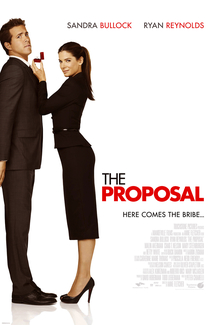
The Proposal, by contrast, is much more of your Hollywood money-printing machine, dangling, as it does, Sandra Bullock and Ryan Reynolds (in less sleazy form than in Adventureland) in front of pretty Alaskan scenery (or perhaps, Northern Exposure-style, somewhere that just looks like AK). Wise heads less in thrall to the charms of Ms. Bullock might justifiably deride it on any number of counts, but I found it perfectly tolerable if overly derivative of her finest hour. I am such a sucker.

Unlike all videogame tie-in films, which essentially provide confirmation for the view that games are derivative and violent nonsense, Scott Pilgrim vs. the World actually takes this much-maligned medium seriously (after a fashion), and uses it positively to create a narrative and an aesthetic that's pretty unique (the excellent Run Lola Run got some of the way there first). The film is chock-full of neat references and dynamics that parallel those of action games, even structuring itself around infamous boss battles. While the "real world" romance at the centre of the film is sketched out a little too perfunctorily to be convincing (Michael Cera's generic slacker performance is wearing thin), its co-opting of so many tricks from gaming make it an infectious blast. More so for those in the know, but I reckon it'd be fresh and fun enough for most jaded cinema-goers.

Friday, 20 August 2010

A MP replies ...

Well raise my rent! I got a (super-prompt) reply through the post from my MP. Or his private secretary at any rate. However, as a Shadow Minister (which is disappointing less sinister than it sounds) my MP is "unable" to sign either of the Early Day Motions (numbers 243 and 185). However, my letter has "prompted [my MP] to carefully consider the issues [I] raised", and the Minister of State for Schools, one Nick Gibb, has been advised of my concerns. Apparently I am to be informed of the outcome of this.

I'm actually rather impressed. I guess that MPs are pretty well set up for this sort of correspondence, but it's still rather pleasing to hear back so quickly. Especially given that Early Day Motions seem generally to get a pretty short shrift in parliament. Anyway, I await the next response with trepidation.

In passing, while checking up on them in Wikipedia, I came across mention of this delightfully misanthropic corker of an EDM.

Thursday, 19 August 2010

A constituent writes ...

One of the many worrisome things that The Coalition is rushing through parliament is a change to how schools can be managed, and how closely they need to follow some nationally-set curriculum. Basically, schools can, in principle, be set up from scratch by interested third parties, and appear set to have a lot more freedom in tailoring what they teach to students. In principle (again), this sounds like it might just clear the first hurdle of plausibility. For instance, like existing academies a school might decide to specialise in some particular way (e.g. business, science, arts), and might like to tweak their curriculum appropriately.

Needless to say, that last sentence was not my first thought. Instead, internet-hardened creationist-hater that I am, it occurred to me that this might provide a new route by which faith schools might bring down The Enlightenment. Ordinarily, this thought would then be followed up by seething rage, a bit of a sulk, and then complete inaction. Fortunately, an e-mail from the BHA spurred me into action. Well, spurred me into following a link to a website that, after a few clicks, automatically drafted me a letter to my MP. Slightly embarrassed that my name would be tied to some generic message, I duly edited this down to that below, then fired it off.


Dear Mr Denham

I am writing as both one of your constituents and as a professional scientist (oceanographer) to bring to your attention two Early Day Motions which I am asking you to support. EDM number 243 reads,

"That this House notes the value and importance of science in the schools' curriculum; further notes the importance of the specific inclusion of evolution and natural selection in the schools' curriculum; regrets that evolution has been dropped from reforms to the primary school curriculum, along with other reforms proposed; further regrets the inclusion of creationist and other pseudo-scientific theories in the teaching of science in some schools; and urges the Government to ensure that all schools teach and promote science and the scientific method and to include the theory of evolution in the science curriculum at both primary and secondary levels."

And EDM 185 reads,

"That this House congratulates the Secretary of State for Northern Ireland on the re-opening of the Ulster Museum; regrets that there is pressure to include creationism in the proposed exhibition of evolution and diversity; and believes that the teaching or promotion of religious beliefs should be separate from the teaching or promotion of science."

Both relate to potential and actual attempts by creationist organisations to pollute science education by introducing their evidence-free literal interpretation of religious texts. While greater freedom over the curriculum may afford certain advantages to students, it is fundamental that deliberate misinformation is excluded from science curricula. Put simply, there is *no support* for any creationist ideas within the scientific community, and to permit the teaching of the contrary is damaging both to students and to our wider technological society. Further, the focus they place on particular interpretations of certain religious texts is liable to needlessly foster disharmony between faith groups.

Evolution is the most important concept underlying the life sciences, it is of paramount importance that it is included in the science education of children. Undermining it by failing to exclude the pernicious nonsense of creationists is in direct opposition to the best information that our science provides, and it will have repercussions far beyond the classrooms.

I urge you to add your support to EDMs 243 and 185.

Yours sincerely,

...


Needless to say, I could rant on all day about the evils of creationism. However, I won't on this occasion, except to just harp back to one of the most annoying aspects of the modus operandi of creationists.

Basically, rather than engage with scientists whose ideas oppose their own through the conventional approach of actually sitting down and doing science, they skip this bit and head straight for the public and politicians. There, in front of an audience with limited time to play with and non-expert knowledge of the subject, they make their case, knowing that it need only sound superficially plausible, and that their main goal, publicity, is already accomplished. Then, with a metaphorical foot in the door, they can then argue, ridiculously, that their ideas be taught to school children alongside "conventional" / "mainstream" / "naturalistic" science. To give them credit, they've long since realised that displacing real science from classrooms is a non-starter, and have rather cleverly latched onto playing the "fairness" / "balance" card. "Teach the controversy" they say, knowing full well how effective sowing baseless doubt can be with an audience of inexperienced and receptive children.

Anyway, enough seething for now. Not least because it's (similarly) baseless until the result of this new Coalition legislation becomes clear. I've already received an electronic reply from my MP's PA, saying that my note "will receive attention", but it'll be a while before the full fallout of these plans makes itself known.

Saturday, 14 August 2010

20K

It's taken me 9 months (since November 2009) to clock up a further 10K ...


Playing up view-envy to the hilt, this picture has 10K hits alone! Grrrr ...

Sunday, 8 August 2010

Threequel

I am such a sentimental sap.

Way back in the dying days of my PhD, an evening spent cruising the drinking dens of Leamington Spa finished up in the house of a friend-of-a-friend, with us all raptly watching the original Toy Story. I fell in love. Not, as might be expected for me, with the whole computer animation aspect, but instead with the emotional / sentimental pull the film exerted on heart-strings I never knew existed.

Several years later, my heart beat a little faster with the news that a sequel was to appear but, knowing sequels, it was a guarded tachycardial rise. Oh ye of little faith. Said heart strings were pulled once more by Toy Story 2, a follow-up that more than matches its ancestor in cleverness and its wholesome brand of sentimentality. To the degree that it's now a touchstone in film criticism (at least when I'm around) as the best example of a violation of the law of diminishing returns (though there is competition).

Imagine, reader, my excitement in hearing the news that a sequel2, a threequel, was in the works. This time around fears of failure were (largely) cast to the wind, and cardiac muscle was much exercised. All justifiably as it now turns out. Toy Story 3 cements the good work of both previous generations, and completes[*] the life-cycle of the child-toy relationship. While, unsurprisingly, things get all emotional at the end (diffused pleasurably by the end-credits sequences), I was much more stretched and strained by the near-death experience faced down by Woody et al. that was immediately preceding.[**] Pixar truly know their onions if they can play an old cynic like me as if I was some finely-tuned sentimentality instrument.


[*] Technically, a sequel is not out of the question, and could pop up in the future if Pixar need a sure-fire financial hit. But it's unnecessary, and would be a mistake given that TS3 essentially closes the "circle of life" for toys. Still, one should not underestimate the power of money.

[**] Again, more excellent diffusion here, with one of the best running gags ("the claw").