Monday, 28 March 2011

Day out in Dorset

After having only driven passed it on sporadic trips westwards, C persuaded me to visit Christchurch with her on Saturday. She's been on many occasions (having once not lived far from it), but I've only ever seen it as a series of roundabouts on the way to somewhere else.

Anyway, we had a great day for it (and, apparently, for insects; they rendered the air hazardously unbreathable at times), in fact the first proper shorts weather of the year. This did, of course, translate into a warm and slightly sticky journey to Christchurch because of the town's sluggish and much put-upon road "network". However, we eventually made it into a parking space close to the town's main landmark, its 11th century Priory.

However, our first port of call was, well, Christchurch's port. Presumably because it's where two rivers reach the sea, the town has a good natural harbour. It's protected from the sea by a tidal marshland, which translates, somewhat unfortunately, to a distant muddy shoreline. Still, it's not like there aren't plenty of nearby places if one's after some littoral action.

The main draw in the town, at least for us, was the Priory, and it didn't disappoint. Despite the size of the town, it's impressively large, and we must have spent more than an hour winding our way through its various chapels and corridors. Needless to say, this left me trigger happy with the camera. Here's view back towards the entrance of the Priory ...

DSC03628

There's quite a bit of stuff in and around the Priory about its commissioning and construction. Including a story about how, when Ranulf Flambard tried to have it built on a nearby hill against the wishes of the townsfolk, the building materials kept mysteriously moving back to the present site. Flambard cited this as the Will Of God, but I think he could have looked more profitably to less lofty intervention. Anyway, the builders are commemorated in this metal frieze ...

DSC03644

And, as usual, there was a lot of stained glass for me to snap photographs of. Among the more unusual pieces, actually in an atrium off to the side of the Priory, was this quality item showing an imminent beheading. This does, apparently, have some sort of historical connection to the Priory, but it still seems a strange thing to make a stained glass window of ...

DSC03649

After the Priory we strolled up and down the town's main street and grabbed an early dinner, but while there are a few other interesting things there (including this art deco cinema), the Priory's the main attraction (though yachties and charity-shop connoisseurs may disagree).

Sunday, 27 March 2011

First cut of the year

Maybe after documenting the first cut of the year for, like, 20 years, I'll be able to say something statistically significant about climate change and lawn phenology. Last year the cut happened on the 10th April ...


In passing, I've no idea where those black bars are coming from - Flickr seems set on messing with my movies. Presumably it's some sort of aspect ratio thing or something. My Fallout movies the other day didn't suffer from it.

Tuesday, 22 March 2011

Wasting time in the Wasteland

Confined to quarters today with a cold (which I've presumably passed along to everyone at work yesterday). While Live Mesh is still working with my work XP machine, this isn't a big hurdle that stops me working. Though a bigger one today seems to be the speed of the connection. Not sure if it's my end or NOC's end, but it's been painfully slow the last couple of hours this afternoon. A perfect excuse for a bit more Wasteland exploring and time-lapse "photography"!

First up is a movie taken from the Scavenger Platform on Lake Mead, and runs from sunrise to sunset ...


This second one shows an eastward view from the slopes of Mount Charleston, looking over the settlement of Jacobstown towards the distant New Vegas strip. Again, it's a sunrise to sunset affair ...


I just need to find a good vantage point to run-off a pretty sunset. Well, and the time - I expect I'll be back in my office tomorrow.

Friday, 18 March 2011

Fighting the Evil Empire

Alerted by a work colleague to an anti-Murdoch petition, I took the opportunity to mangle a half-baked, pseudo-ecological observation into an argument against the expansion of the Evil Empire of said Media Tyrant ...

Dear Secretary of State,

As a ecological scientist, I have a small degree of experience studying competition, a pivotal aspect of this subject, and one never very far from the lips of red-in-tooth-and-claw capitalists (though less frequently their actions).

What I've learned from this is that, for all the immense variety of life histories on Earth, conglomerating all living matter into a single super-organism has not been a strategy that is favoured by Nature.

This may seem an obtuse point to raise with respect to Rupert Murdoch and BSkyB, but I am entirely unable to see how attempting to go where Nature has not helps either capitalist systems or the democratic habitats in which they occur.

Unlike focusing of market power in an oblique sector of the market, say a plastics conglomerate, what is being proposed by Rupert Murdoch is, effectively, a winnowing of a service critical to democracy.

As such, I would like to register my objection to the proposed deal and call on you to immediately refer it to the Competition Commission.

AXY

... Not that I expect my words to have any significance beyond me venting my distrust of the owner of the odious Fox News.

Friday, 11 March 2011

RED

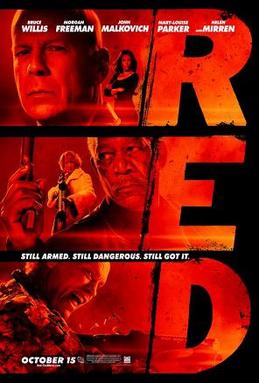
Ever since the almost unforgivable Armageddon, I've been wary of films involving Bruce Willis, but he's still someone who's able to turn in good work every now and again. Not that RED is exactly "high quality" - more a guilty, if solid, pleasure. By way of summary: retired CIA agent chats up improbably single office girl, only to have former employers come after him, necessitating abduction of said girl and hook-ups with varied former colleagues as the motive for targeting him is unravelled. Very little that happens in this "action comedy" comes as much of a surprise, but it makes up for its shallowness with some crowd-pleasing performances (cf. Mirren and Malkovich slumming it) and some enjoyably daft set-pieces. And, still my heart, it features the perfectly-formed smile of Mary-Louise Parker.
Grade: B (high +1 on the Leeper Scale)

Sunday, 6 March 2011

Time-lapse season ...

... is upon us once more ...


This one used a recent purchase that C made from eBay: a reflective egg cup/warmer. The lighting's a little bit too changeable, and makes the early part of the movie a little incoherent, but it picks up at the end a bit. Makes me think that getting hold of a mirrored sphere might make for interesting photographic possibilities.


This one's a little more conventional, and the light's a lot more consistent. So it works a lot better - well, if one likes watching the sun track around a room at high speed ...

Friday, 4 March 2011

Shrink

Shrink
A not-as-deep-as-it-thinks-it-is LA-set drama about a celebrity psychiatrist with his own problems. While too incestuously Hollywood (it even visits the sign several times), as well as predictable from the get-go (a healer who needs healing), it's all done pretty well, and I'm a bit of a pushover for nice characters and Kevin Spacey.
Grade: C+ (0 on the Leeper Scale)

Ice-edge blooms

Oooh - fleeting fame on our corporate website's front page! Actually, the fame really belongs to our student, Mahé, whose enthusiasm more than 18 months after leaving us finally got us over the finish line. In spite of the best efforts of GRL to misunderstand basic English. In passing, as with all such press releases, the "quotes" attributed to me are near-lifts from the paper by our press officer. I did not say these things ...

No sequel please

Apparently, some fools over at Warner Bros. seem to think that the world is short one Blade Runner sequel, and want to redress this. While, thankfully, there's still plenty of time for them to fail in their aim, I can't help but cast scorn on such an ill-founded idea. Top of the bill, what can they possibly bring to the setting and characters that could conceivably add to the original? As a meditation on slavery [*], the story is complete - what more of value can be said? Secondly, in spawning a sequel (or, worse, a prequel) they'll doubtless have to finally legitimise one of the number of cuts of the original film - which group of fans do they wish to piss off more? Those fanboys who worship at the altar of Director-Knows-Best (regardless of deeper meaning), or those pretentious types [*] who value the (original) film for its loftier ambitions? Basically, while the possibility to be surprised is ever-present, what can any (pre-)sequel do that allows it to avoid antagonising disparate fans while being of interest to everyday cinema-goers or to those with a critical bent? Oh, wait - I forgot - it need only make buckets of cash ...


[*] At least as I read it. As I've harangued friends endlessly in the past, the only cut of the film worth a damn is the original theatrical release. Sure, it's not what "The Master" wanted (of whom, can I just say Gladiator - WTF?), and it's not without its own flaws, but it's the only one that has a meaningful story arc. Namely: human killer sent to "retire" repressed and ostensibly valueless replicants is shown, through various (violent) events, that they have moral value and ultimately comes to spare and rescue one of them. This has a lot more weight than: unknowing replicant killer sent to "retire" fellow replicants ultimately realises that he is one of them. But what do I know?

Thursday, 3 March 2011

Norwegian reflections

Back in Scandinavia, but no crime in sight this time. On the contrary, Out Stealing Horses, by the Norwegian novelist Per Petterson, has won praise, and prizes, from the literary establishment. There's no hint of a Salander or a Wallander in this slender volume.

Set in contemporary Norway, the novel is narrated by Trond, a recent widower who has retired to the rural east of the country, an area familiar to him from his youth in the 1940s. While gradually slotting himself into a slower-paced life full of practical considerations, he meets Lars, a neighbour and fellow hermit, who he recognises from his distant youth. Reflecting on this time, Trond first reminisces about his friend Jon, Lars elder brother, and how an unthinking action on Jon's part resulted in tragedy and began a chain of events that led to the breakdown of both of their families. Pivotal to this unravelling is the unspoken relationship between Trond's father and Jon's mother, a bond formed by resistance activities during World War 2. Told largely through Trond's oblique reminiscences of his summers with his father, the novel meanders gently as Trond comes to a better understanding of the events of his youth. This insight also sheds light on Trond's own relationships and on the path he has taken his life.

Overall, this is a beautifully written tale of remembrance and re-evaluation, full of great little details, and entirely happy to tell them at its own pace. While the core structure of an elderly - and male - narrator looking back over his life is a fairly standard trope, the novel distinguishes itself in the quality of its writing and its supple avoidance of the usual clichés. On the former point, the translator is to be commended for the care she's taken in getting what are at times quite subtle passages into lovely English prose. On the latter, I really quite liked the way that the author surprised me throughout by gradually filling out the story and backstory without ever doing so bluntly or obviously.

That said, it's definitely one of those novels where, at the end, I'm not really sure what it's about. Sure, I get that the narrator is piecing elements of his past into a more complete whole, but I'm not sure to what end. My best guess is that there's some parallel being drawn between the narrator's father's sudden abandonment of his family and the narrator's own gradual withdrawal from his own family. But the author leaves a little bit too much only hinted at for me to be sure. While I usually like my novels a little less vague, the writing here makes up for this, and the author doesn't dissemble into unexplained occurrences, he just lets the reader to a bit more work filling the gaps. Or so it seemed to me. And, thankfully, the author doesn't pull that trick of inexplicably holding back some vital information just to give an unearned sense of closure on the final page (cf. The Sea - a novel that I really came to dislike in the end).

Anyway, even though I couldn't work out what Mr. Petterson was getting at, I really quite enjoyed this one. Buoyed up by this one, C has bought his most recent novel, so I'll doubtless get back to him again at some point.

- Posted using BlogPress from my iPad

Wednesday, 2 March 2011

Popular posts

Just spotted a widget that displays a blog's most popular posts. I've added it to the left sidebar (then patched it with help from over here), and it looks pretty good. At the moment it's showing my I ❤ MATLAB post from November last year as "most-loved". I've just looked at the stats and, for better or worse, this is unlikely to change any time soon - inexplicably, it's waaaay ahead of everything else. Can someone please help me and read something else here instead?

Thursday, 24 February 2011

Oscars 2011

With Oscar night falling at the end of this week, it's time to go through the runners and riders I've seen this past year to pick out who I reckon is going to win and, much more importantly, who I think should win. For reference the 10 films in the running for Best Picture are as follows ...
  • Black Swan
  • The Fighter
  • Inception
  • The Kids Are All Right
  • The King's Speech
  • 127 Hours
  • The Social Network
  • Toy Story 3
  • True Grit
  • Winter's Bone
Of these, those underlined are the ones that I've actually seen. 70% isn't bad (and is actually the same fraction as last year), and 2 of the 3 that I'm missing I wasn't in a big rush to see anyway (Black Swan and 127 Hours). They'll (probably) make it to our DVD list one day, but I'm not mad keen on watching either the psychological deterioration of a ballerina, or the obligated self-amputation of an extreme sports fan. Consequently, I'm (mis)judging them as non-starters for the winner's podium. While the remaining unseen title, The Fighter, does sound worth seeing (though I write as an Amy Adams fan), it hasn't been talked of in tones that make me think it's a likely winner. So my first prediction is that the winner will (and should) be drawn from the films that I've actually seen.

Regarding these films then, what's the story? First of all, I really liked every one of them - there really wasn't a duffer in sight. So, again like last year, there aren't any that I'd actively be disappointed to see win - no Titanics, no Bravehearts and certainly no Gladiators. But at the same time, I think are more deserving of victory than others. Anyway, in alphabetical order ...

Though nicely brain-twisting, Inception probably doesn't merit the winning slot. It creates a uniquely imaginative world based around the malleability of dreams, and brilliantly follows through on the logic of this world, but the bottom line is that it isn't really as emotionally grabbing as it thinks it is, and the "dream-physics" that it posits have nothing to do with real dreams. So though an enjoyable and engaging ride, no cigar.

The Kids Are All Right, by contrast, is a lot more emotionally (and politically) satisfying, dealing as it does with down-to-Earth family relationships, albeit with the spin of a lesbian nuclear family. By normalising what to many people is still something of a taboo, this central twist gives it a bit of an edge, one that may help it swing Academy voters. But as it otherwise presents a fairly run-of-the-mill parent/child/sperm donor plotline, I'm not sure that it's ambitious enough. I'd be very happy to see it win though. [Original comments]

The ubiquitous The King's Speech is the one that's doing all the running in the UK. It's certainly been raking in the cash at our local arts cinema off the back of its mass appeal (largely with a particular, grey-haired demographic). Again, I really enjoyed it, and it combines a tale of royalty with triumph over adversity, World War 2 and Winston Churchill - a fairly winning combination. But I just prefer some of the other films, and the republican within me has steeled me against its charms. That, and I'm not entirely happy with its rather fast and loose treatment of history (plus: I can't square Helena Bonham Carter, who I've always really liked, with the Queen Mother).

I originally found it hard to comprehend why anyone thought a film about the origins of facebook was a good idea, let along the director David Fincher. But I was very pleasantly surprised at just how well what should, by rights, be a dull dot-com tale was brought to life on the screen. Fincher and his screenwriter Sorkin have definitely pulled something of a blinder with this one, and have made a enjoyably well-paced drama out of some fairly hard-to-like characters and, well, geekery. The Social Network seemed a surefire winner a few months back, but its star seems to have fallen as rivals have been released. I wouldn't complain if it were to win, but my money's moved elsewhere. [Original comments]

It's difficult to count the number of ways in which I love Toy Story 3. Of all the films in the running, this is probably the only one for which I have unequivocal love. Thanks to its earlier, peerless instalments, the bar was set high, but Toy Story 3 totally cleared it. Though fantastical, it invests its central, non-human characters with levels of pathos, as well as humour, that other films just can't touch. And the imagination and inventiveness that have gone into it make it a pretty infectious joy to watch. As a threequel, its placement in the starting line-up is reminiscent of that given to Return of the King, which effectively stood in for all three films in the Lord of the Rings trilogy. But it's also more plausibly in the running for Best Animated Feature, so though I'd be delighted if it won Best Picture, I'm pretty sure that it won't (though if it doesn't win in the animated category there is no justice!). More generally, I'm also a little against the idea of an animated fantasy winning Best Picture - but that's probably just cinema-as-an-art snobbery. [Original comments]

The last time that the Coen Brothers tried their hand in the remake department, they uncharacteristically produced a rather lame mess (whose sole redeeming feature was a nice line in Southern Gothic). The contrast with their most recent film, True Grit, couldn't be greater - this time around they're firing on all cylinders (or perhaps barrels?). The result is a hugely enjoyable, and darkly humorous, western yarn, solidly grounded by the performances of Jeff Bridges and newcomer Hailee Steinfeld, whose chalk-and-cheese relationship in the film lightens what's an otherwise gritty western. Given that it's both a remake and a western, I was surprised at just how much I liked this. Whether its likely to be a winner is more difficult to say - being a remake probably counts against it, for instance. But, again, I'd be really pleased to see it make off with the statue.

Last, and pretty far from least, is probably the most low-key of the runners, Winter's Bone. In some respects it, too, can be viewed as a western, albeit a modern-day one in which the impoverished midwest stands in for the wild west, and where the outlaws are more interested in methamphetamine than holding up stagecoaches. Like True Grit it also rests on excellent central performances, here Jennifer Lawrence and a rather scary John Hawkes. But it avoids the dark humour of its rival film with a plotline that has more than a passing resemblance to Heart of Darkness, as Lawrence's character seeks her estranged father among rural drug families. Again (I'm sounding like a broken record ...), I really enjoyed this film, and would be pleased were it to win. Certainly, as a more "serious" film, I think it has a good chance, but it's perhaps from a little too far outside of Hollywood to charm Academy voters.

Anyhow, overall I'd rank the films as follows in terms of "who I'd like to win" ...
1=The Kids Are All Right
1=Toy Story 3
1=True Grit
1=Winter's Bone
5The Social Network
6The King's Speech
7Inception

I can't really decide among my top four, so there's no 2nd, 3rd or 4th places, but the remaining three films are slightly easier to separate. It feels a bit mean to place Inception last, but the field is strong this year, even if I can't really pick out one film that's head and shoulders above the rest. I will be (ever-so-slightly) disappointed if the winner isn't in drawn from the ranks of my top four, but I won't be seriously put out by any winner this year. There's just nothing even faintly approaching the cringingly awful Gladiator for me to get all indignant about.

Anyway, all will be revealed this coming Sunday. Can't say I'll be staying up for the ceremony, but I'll be interested to see which way the Academy bends when confronted with such a strong field. Will it be towards a cinema staple like a western? A fast-talking up-to-the-minute dissection of the dot-com era? A crowd-pleasing animation? Stirring but royal-loving and revisionist history? Or a warm, diversity-embracing family drama?

Self-referencing

Generated by this QR-Code Generator for this website.

QR-code (Strange News)

Confused? Try here.

Tuesday, 22 February 2011

Virtual dawn

Back to the Wasteland ...


Monday, 21 February 2011

Tales from a favourite city

Not long before I moved to England and started at the University of Warwick, I spent about a week in San Francisco. It was at the end of a spell working in Los Angeles, and I was taken there (and back!) by one of my best friends. As my experience of Californian cities up to that point was largely the sprawling mess that is LA, I had a great time (though I will always love LA). Nestled around the Bay, SF was much more clearly a city to my mind, with a well-defined centre, and an easy-going ambience that largely eluded its southerly sister. Having enjoyed my visit so much, and facing down the barrel of a dismal English winter, I was overjoyed when a new drama set in SF started on TV. As well as reminding me of somewhere dear to my heart, Tales of the City pleasingly warmed the cockles of my liberal heart, with its humane stories of (usually) nice people who just so happened to be diverse in the sexual preferences department.

So, flash forward to the present day, I was rather pleased to pull Armistead Maupin's latest installment in his long-running series out of my Christmas stocking. But would Mary Ann in Autumn be able to stand up to the rose-tinted nostalgia I have for the now-distant TV series?

Set shortly after the 2008 Presidential Election, the novel is structured into four strands that follow the characters of Mary Ann, the straight heroine of the original novel and TV series; Ben, the husband of Mary Ann's old friend (and fellow TotC alumnus) Mouse; Jake, an employee of Mouse and housemate of TotC's now-elderly Mrs. Madrigal, who is preparing to be transgendered to a man; and Shawna, Mary Ann's long-abandoned step-daughter, now a sex-blogger living in San Francisco.

Fleeing her disintegrating marriage, Mary Ann has returned to San Francisco to visit Mouse, her oldest friend, to whom she reveals a recent diagnosis of uterine cancer. Rallying to her aid, Mouse fixes her up with a local lesbian surgeon, while Ben acquaints her with facebook. Unexpectedly taking a shine to it, Mary Ann is pleased to encounter both old friends and fans of her east coast TV work. However, one fan, Fogbound One, appears to know secrets from her past that she had long buried. Distracted by Mouse and Ben, and by her treatment, Mary Ann ignores this interloper, but his interest in her provokes some climactic revelations.

In parallel, Ben is gradually adjusting to married life with Mouse, against the backdrop of California's striking down of gay marriage. Though initially jealous of the close relationship between Mouse and Mary Ann, he gradually warms to her and her dramatics. His regular outings with his dog also introduce him to an old loner, Cliff, with whom he gradually forges a bond, but whose personal tragedies trigger a rapid distancing by Ben.

Meanwhile, Jake is awaiting the completion of his gender-reassignment surgery, and has begun living as a man. Meeting Jonah, an attractive Mormon missionary in town to support Prop. 8, Jake finds his interest piqued even as he is repelled by Jonah's religious homophobia. But despite this faith, the interest is not one way, and Jonah find himself attracted to Jake, though he remains deeply conflicted about his nature.

Also not long back in San Francisco, Shawna is casting around for material for her blog, and debating whether she should use her own experiences with her performance artist boyfriend, Otto. Accidentally crossing paths with a homeless woman, Shawna is intrigued by her grim humour but hopeless situation. Determined to find out more about her life, Shawna co-opts the assistance of Otto and tracks the woman, Leia, to a destitute and dangerous part of town. But Leia's lifestyle has fatally wounded her and Shawna finds herself watching on in the last chapter of the homeless woman's life. Still curious about how Leia's life turned this way, she investigates with what little information Leia was able to pass on before dying. This turns up an estranged husband and, ultimately, a hidden past that connects back to Mary Ann.

It's an interesting novel to rate, this one. I certainly enjoyed it, though largely because it was a like meeting up with an old friend. A lot of time has elapsed since the events of TofC, and the overlapping characters have been pretty busy. Mary Ann, for instance, seems to have had a number of marriages, though all child-less, as well as a career on television. So the novel served, to me at least, as a pleasurable catch-up for the events of the intervening 6 novels. I actually quite enjoyed hearing about what Mary Ann and Mouse had been doing, especially in such a condensed form.

In fact, that the novel includes so much history almost suggests that Maupin intends the novel to appeal to first-time visitors to Barbary Lane (or to delinquent visitors like myself who've been out of contact for decades). However, to anyone who's never seen the TV series, or who has never read any of the other novels, this book is liable to be an extremely dull read. Or possibly even an infuriating one, especially when the novel's climax stretches back to the events of the first novel. For me, this wasn't a problem at all, since my experience of the series is just that first book (and then only the TV version). But new readers are not likely to appreciate snatching only brief mentions of characters and events that they know nothing about but which are necessary to fully enjoy the novel.

There's also no escaping the fact that the novel is a pretty feather-light read. Though it has its dark moments, it's essentially a series of rather comfortable, and sometimes comforting, tales about old friends, juggling relationships and, well, changing gender. Which, as I've said already, I enjoyed. But it isn't anywhere near as ground-breaking as Maupin's first visit to Barbary Lane, which opened a window into the gay scene for those outside it (at least, it did for me). Of course, I don't suppose that it's meant to be, but the cultural significance of the first book does cast something of a long shadow.

Still, if nothing else, it's provided a spur to look back to the earlier book. I don't think I'm done with Mary Ann just yet.

Sunday, 20 February 2011

Labile stamina

One of the victims of my twisted ankle has been my cycling. Bar a stint living in Leamington Spa at the end of my studies there (it was a little too far on scary roads), I've pretty much been cycling every weekday since I first moved to U. Warwick in autumn 1993. So my eight week lay-up has been, by far, the (second) longest stint I've been off the saddle. Anyway, today I got back on to test out my ankle (after a good 15 minutes spent de-rusting my chain). The good news is that it looks like cycling doesn't put much strain on my busted ligaments. The bad news is that my break from two wheels has sapped my stamina back to featherweight class. I suspect I'm going to have to take it easy getting back to self-powered commuting. C's not off taxi duty just yet.

Three biologists go into a bar ...

Up in London yesterday to catch up with two friends from my U. Warwick days, MvB and AL. It's been quite a long time since any of us met up, but even so it was almost like no time had passed at all. It was particularly nice to be in the company of biologists again - though there are plenty at NOC, I've walled myself into the modellers compound. Anyway, hopefully our next meeting won't be as far into the future as our last one was in the past.

DSC00646

There are a few more photos over at Flick - including one or two where AL is able to get a grip on his blinking reflex.

Thursday, 17 February 2011

Alternative "medicine"

After having read about the government's plan to regulate herbal medicine, with its side-lining of the idea that, perhaps, evidence matters, I came across this news item on the website of the lobbying organisation that "achieved" this triumph. Unable to stand the crowing there, I fired off a comment, which is now awaiting moderation. I suspect that it won't be getting published, but I'm just livid at how vested interests, via their mercenary lobbyists, can make a nonsense of evidence-based considerations.


Nice one Cogitamus. Scoring a goal against rational, evidence-based health care policy is quite a result. You must be really proud to be servicing value-free clients such as the EHTPA against the best interests of the general public. It’s reassuring to know that corporate ethical standards (which I note you make a point of emphasising) having nothing to do with corresponding human ethical standards. What next? I’m sure that, say, the arms industry could really benefit from slackening the restrictions that prevent it from supplying whomever it wants. Best wishes for your next triumph over sanity.

Wednesday, 16 February 2011

American Idol

February 6th 2011 was the 100th anniversary of the birth of Ronald Reagan, US President from 1981 to 1989. While this was unsurprisingly marked in the US, it passed with only a few mentions in the UK, one of which was the BBC4 broadcast of American Idol - Ronald Reagan. Part of the excellent Storyville series, the biographical documentary covered Reagan's life from inauspicious beginnings in Illinois, through his acting career to his pivotal time with General Electric, then onto his more well-known role as "Nemesis to Communism".

Having grown up during his presidency, I've always been interested in him, particularly given the buffing his image has received from the New Right in the two decades since he left the Oval Office. So much of the documentary didn't come as news to me: his cooperation with HUAC; his catastrophic voodoo economics; his covert support of both Iranian theocracy and murderous right-wing paramilitaries in Central America.

What I did learn was that my antipathy towards Reagan, while based in part on his record, is fuelled more by my contempt for the myth-makers who now elevate him to the status of some sort of free market saint. They aren't interested at all in what he actually did while in office, or even what sort of man he was, but just in amplifying those aspects of his rhetoric that suits their self-serving agenda. More, they appear entirely uninterested in actual facts on issues of politics and economics.

A few parts of the documentary particularly stood out. First, was the frequent appearance of Reagan's son, Ron Reagan, whose description of his father perfectly balanced love and a degree of awe with a recognition that Reagan's record as President contains uncomfortable elements, even for his family. The contrast with Reagan's adopted son, Michael Reagan, who sadly exemplifies the worst excesses of the myth-making right, could not have been greater.

Another revealing interviewee was a former soldier, who had served during the period Reagan was in office, and who appeared throughout the documentary solidly supporting the myth. But in his final appearance, he powerfully turned on the myth, and recognised that Reagan's anti-regulation, anti-government, pro-business agenda had ushered in an era grounded in the worst sort of live-today materialism that has nothing to do with the freedom or values in Reagan's own rhetoric. Presumably thinking of Gulf Wars I and II, he also snapped at Reagan's bombastic 1980 election campaign, grounded in the lie that, contrary to the remonstrations of the then-sinking Carter presidency, there was no limit to oil in the world.

Anyway, great stuff. And all the better for not being a hatchet job.

- Posted using BlogPress from my iPad

Saturday, 12 February 2011

The Secret in Their Eyes

We finally caught up with last year's winner of the Best Foreign Language Film Oscar, the Argentinian film, The Secret in Their Eyes. It's part murder mystery, part political intrigue, part love story and part meditation on memory. But it was certainly wholly enjoyable. And considering this diverse range of composite layers, not to mention its flitting between the 1970s and the "present day", it's put together brilliantly. The two lead actors really help, juggling both the past and (tentative) present relationships of their characters. Highly recommended.

One aspect I thought might feature a little more prominently was Argentina's descent into the Dirty War that began in late 1970s. While this is still pivotal to the plot, indeed it largely divides the past and present sections, it wasn't dwelt on as much as I'd thought it would be. Still, with such a tight and multi-faceted film, it would probably have been a mistake to get too heavy on this part of Argentina's history.

Anyway, I'll be surprised if a US remake doesn't appear at some point. Given political sensitivities, it'll be interesting to see if it retains the setting ...