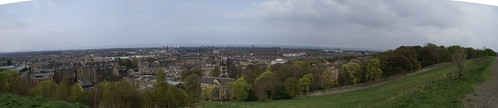
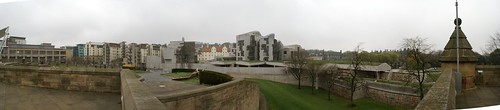
.png)


A little longer might have been better, but the clouds melted away so I had to cut it short.


Unforced Variations: Oct 2026
2 days ago
 Took a trip up to London to catch the Picasso: Challenging the Past exhibition at the National Gallery. The idea behind this exhibition was to show examples of Picasso's work that were inspired by, or are responses to, the works of other artists. These included (relatively) well-known works such as Velázquez's Las Meninas and Manet's Le déjeuner sur l'herbe, along with a large number of others. The works exhibited covered Picasso across his entire career, starting with his early representational work, moving through cubism and taking in more symbolic or surrealist works. Needless to say, the exhibition works simply as an opportunity to see work by Picasso. Although I'm usually skeptical of grand, sweeping statements, especially those about art, I was reminded again that Picasso really is the 20th century's premier artist. His range is truly extraordinary, and his skill from an early age as a representational artist allows him to beautifully execute works, regardless of the movement they fit into. This is perhaps a bit gushing, but he's the one artist I admire who's always interesting, and he never went down the "Rothko route" to obscurantism/pretension. Anyway, the one thing this exhibition dropped the ball on was doing a good job on providing the context that it was supposed to be centred on. The little guidebook we got showed some of the works that Picasso was referencing, but the exhibition would have been much improved if these works, or reproductions of them, were also displayed (or displayed better). Some of the works alluded to I was aware of, but many I'd not a clue about, and the exhibition does tend to assume a level of knowledge that's somewhat excluding. Still well worth the trip to London. Actually, one thought that did occur to me was that, while he worked in most of the 20th century's movements, Picasso never tried anything in Pop Art. Maybe a bit too low-brow for him?
 Set one generation after the events of Red Thunder, the novel is narrated by Ray Garcia-Strickland, son of the central character and narrator of the earlier novel, Mannie Garcia. While Mars represented the High Frontier in Red Thunder for Mannie and his friends, now it's an over-rated tourist trap: great for a few weeks holiday, but unbearable if you're wedded to it by virtue of your father being among the first to set foot on it. Much like his grandmother does on Earth, Ray's father now runs a hotel on Mars, and Ray and his sister serve as its unpaid staff. But it's a disorganised destination for the tourists who have over-run it, and there's only one place worse as far as Ray is concerned: Earth. But life isn't all bad, where else can you surf down from a moon to the surface of a planet? However, a relativistic impact into the Atlantic Ocean causes disaster for the eastern seaboard of the US, and contact is lost with Ray's grandmother, forcing Ray and his family into a rescue mission from Mars. Not as difficult as it sounds given the squeezer drives created from the force field "bubbles" developed by Ray's "uncle" Jubal, but post-impact Florida is a lawless wasteland while the authorities struggle to restore order. But the known difficulties of the anarchy in Florida pale compared to those when the family returns to Mars. Unnerved by the impact, and by the disappearance of Jubal from his Falkland Island laboratory/prison, a shadowy military force descends on Mars to pressure Ray and his family for information. In the ensuing civil unrest on Mars, its citizens discover, for the first time, a new unity and patriotism. While once the children of Earth, they are now Martians.
Before I fired this off, I circulated it to a few of my friends at NOCS. While they generally liked it (or perhaps were just very polite), none of them bought it. What's more, it turns out that two of them, APM and BS, physicists to a man, very much subscribe to the "free will as illusion" school of thought. Not entirely to my surprise since there appears to be nothing by way of a mechanism (let alone a plausible mechanism) for material to somehow be both self-aware and capable of channelling this to affect reality. On this I'd completely agree with them, but I do still have a problem swallowing the idea that we're not free (to a degree) on, well, wishful-thinking grounds. Regardless of the subjective fact that I feel free (cf. my articulations in the submitted correspondence), I just don't like the idea that I might not be, and that I am living in a world where it's not possible. APM and BS seem OK with this, but it's not for me. Partly because agreeing with the idea seems somewhat tautological: what, simply, does it mean for me to agree with the proposition that I have no free will, when agreement itself seems to undercut the very notion?
Martin Heisenberg (Nature 459, 164-165)1 makes a number of intriguing points concerning the reality (or illusion) of free will in humans and other animals. However, to my mind (free or otherwise), his review overplays randomness as a route out of slavish determinism. Stochastic noise, quantum mechanical or otherwise, hardly seems the path to a triumphant restoration of self-determination. Instead, while it counts more as a hint or indication rather than hard empirical evidence of an underlying mechanism, the appearance of free will is telling from an evolutionary perspective. Assuming that free will is annulled (and I include Heisenberg’s stochasticism in this class), a biologist might well question why natural selection has gone to the bother of giving organisms the perception that they are ploughing their own furrow. If there is no possibility of any consequences of this perception feeding back to guide events, why has selection acted at all? Furthermore, why has selection furnished the minds of animals like ourselves with all sorts of carrots (pleasure and love) and sticks (fear and pain) to guide us towards goals that service the genes that build us? Heisenberg is right to question overeager neurodeterminists, but he may have chosen (or not, of course) the wrong route for doing so. One question for those who deny a seemingly obvious feature of personal reality is why, given that we are only scratching the surface of neurobiology, that we have yet to determine which flavour of quantum reality is the right one, and that the universe contains as-yet inexplicable entities such as dark matter and dark energy, why we can so quickly preclude free will.
1 Heisenberg, M. (2009). Is free will an illusion? Nature 459, 164-165.
 The eponymous Gabble, or Gabbleduck, is a predatory alien species that first appeared in the novel The Line of Polity on the planet Masada. Named for their appearance and for the nonsense speech that they continually spout, they are simply one part of the violent ecology that characterises this world. They feature here in three stories stories, the latter two of which question whether they really are the unthinking animals that they appear. Instead, the human scientists who encounter them gradually uncover evidence that once they were sentient with their own space-faring empire, but that events transpired that forced them to cast aside first their technology and then their civilisation. The nature of these events is darkly hinted at, but Asher seems to be saving his revelations for a further story.
 Driven by his evangelical fervour and his wartime experiences as a soldier in another distant jungle, Nathan Price takes his wife, Orleanna, and four daughters, Rachel, Leah, Adah and Ruth May, to the Belgian Congo to continue a mission abandoned by a defrocked Catholic priest. Armed with anti-malarial quinine and other benefits of the civilised western world, he sets out to bring the benighted residents of Kilanga to God. Initial failures to successfully raise their western crops become compounded by a willing incomprehension of the lives of the people around them, and the family slowly begins to slide into destitution and despair. But convinced that these are trials sent by his God to test his resolve, Price refuses to countenance abandoning the mission, even as this already precarious situation is compounded by the aftershocks of political tectonics elsewhere in the world. It is 1959, and independence for African nations is in the air, but the democracy-pushing west has interests that can't be upset by the misguided choices of the legitimate electorate. Told from the different perspectives of each of his four daughters, and by the retrospective narrative of his wife, the novel describes the tragic unwinding of Price's plans. However, his intransigence to Congolese culture and life is balanced by his daughters who, still growing up in this world, reach, by separate paths, their own accommodations with the Congo.
As long as I kept moving, my grief streamed out behind me like a swimmer's long hair in water. I knew the weight was there but it didn't touch me. Only when I stopped did the slick, dark stuff of it come floating around my face, catching my arms and throat till I began to drown. So I just didn't stop.